Overview:
Consciousness is the result of complex interactions between neural networks, heart-rate variability, and quantum coherence within cellular structures. While traditional neuroscience views the brain as the sole generator of thought, emerging biophysics suggests the brain acts as a biological transducer for a broader field of information. This integration of neuroplasticity and heart-brain coherence allows individuals to intentionally shift their internal state, leading to enhanced perception, emotional regulation, and the realization of peak human potential.
The mystery of how three pounds of wet tissue can generate the vibrant, multi-colored experience of a sunset or the profound depth of a first love remains the greatest challenge in modern science. We call this the hard problem of consciousness.
For decades, we have mapped the brain like a static geography, identifying which regions light up when we speak, move, or feel fear. However, mapping the hardware does not explain the software of the soul. We are now entering a transition period where neuroscience meets quantum physics, revealing that our awareness is not just a byproduct of chemical reactions, but a sophisticated dance of energy and information.
To understand how the brain creates our conscious experience, we must look beyond the individual neuron and into the spaces between them. We must examine how the heart dictates the rhythm of the mind and how the very fabric of reality might be woven into our biology.
This journey into consciousness technology is not just about understanding the world, it is about learning how to master your own biology to unlock deep happiness and visionary capability. That is the central mission of LeaveWeave Foundation. Let’s explore this in depth below.
Table of Contents
- Is the brain a generator or a receiver of consciousness?
- What role does heart-brain coherence play in our perception?
- How does neuroplasticity allow us to rewrite our internal software?
- Is there a quantum engine hidden inside our brain cells?
- Can we bridge the gap between neurofeedback and deep happiness?
- The Human Potential Protocol: Five Steps to Coherence.
Is the brain a generator or a receiver of consciousness?
The traditional materialist view suggests that the brain is a biological computer that produces consciousness much like a kettle produces steam. In this model, once the brain stops functioning, the light of awareness simply goes out. However, a growing number of physicists and neuroscientists are exploring the radio metaphor. In this scenario, your consciousness is the broadcast, and your brain is the receiver. When you turn the dial on a radio, the music changes, but the radio did not create the music. It merely translated invisible electromagnetic waves into audible sound. If the brain is a receiver, then our thoughts and emotions are influenced by the quality of our tuning. This explains why different states of consciousness, such as deep meditation or flow states, feel like we are tapping into a different frequency of reality altogether.
What role does heart-brain coherence play in our perception?
Most people assume the brain is the undisputed commander of the body, but the heart actually sends more signals to the brain than the brain sends to the heart. This is done through the vagus nerve and the heart-s extensive electromagnetic field. When we feel stressed, our heart rhythm becomes jagged and disordered, sending signals to the brain that inhibit higher cognitive functions. This is why it is hard to think clearly when you are angry. Conversely, when we practice heart-brain coherence, the heart rhythm becomes a smooth, sine-wave pattern. This coherence acts as a master clock, synchronizing the nervous system and opening the door to the prefrontal cortex. This state allows for a higher level of perception where we see solutions instead of problems. It is the biological foundation for what many call the state of flow.
How does neuroplasticity allow us to rewrite our internal software?
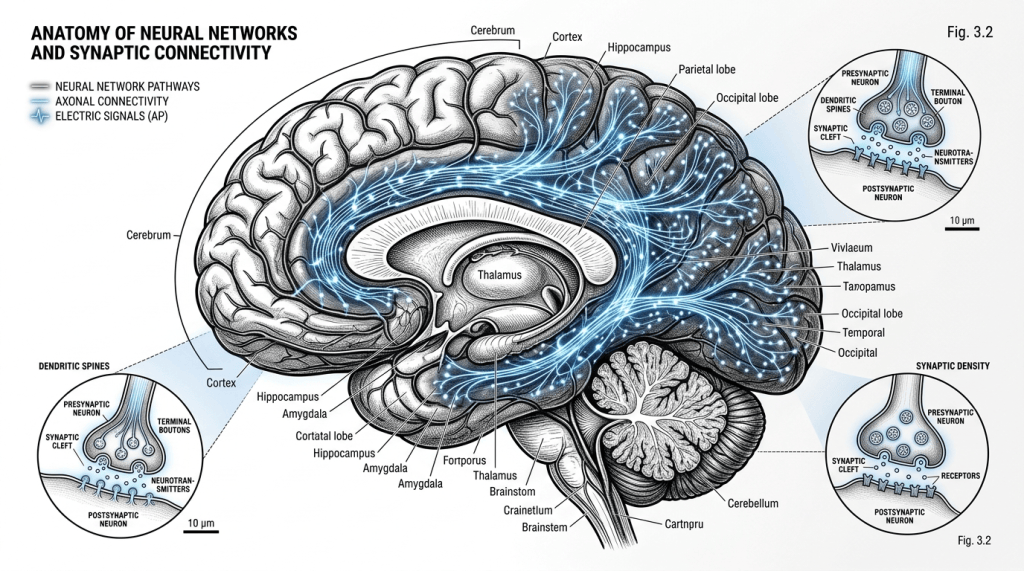
The brain was once thought to be hard-wired after childhood, but we now know it is incredibly plastic. Neuroplasticity is the ability of the brain to reorganize itself by forming new neural connections throughout life. Every time you think a thought or perform an action, you are physically carving a path in your brain. The more you repeat that thought, the deeper the path becomes. This is a double-edged sword. If you focus on lack and anxiety, you build a superhighway for those experiences. However, by intentionally choosing new thoughts and behaviors, you can prune away old, limiting circuits and build new ones. This is the essence of consciousness technology. You are not a victim of your biology, you are the architect of your own neural landscape. Deep happiness is not something that happens to you, it is a skill that you build through consistent neural reinforcement.
Is there a quantum engine hidden inside our brain cells?
To explain the speed and complexity of human thought, some scientists have turned to the world of the very small. The Orch-OR theory suggests that consciousness originates from quantum vibrations in microtubules, which are structural components of our neurons. If this is true, it means the brain is a quantum computer capable of processing information at a level far beyond classical physics. This would allow for non-local connections, meaning our consciousness might be linked to the universe in ways we are only beginning to understand. This quantum coherence within the brain suggests that we are not isolated islands of awareness, but part of a larger field of intelligence. When our brain operates in a coherent state, we are literally in sync with the underlying geometry of reality.
Can we bridge the gap between neurofeedback and deep happiness?
Deep happiness is often misunderstood as a fleeting emotion, but in the realm of biophysics, it is a state of high-order physiological organization. We can now measure this using neurofeedback and heart-rate variability monitors. By seeing our brainwaves in real-time, we can learn to enter alpha and theta states on command. These are the states associated with creativity, healing, and profound peace. The bridge between technology and happiness lies in our ability to self-regulate. When we use tools to monitor our internal state, we take the guesswork out of spiritual practice. We can see exactly which thoughts cause our systems to crash and which intentions bring us back into alignment. This is the future of human potential: a world where we use data to support our journey toward enlightenment and emotional freedom.
How does the integration of these fields change our daily lives?
When we combine the insights of quantum biology with the practical application of neuroplasticity, we realize that we have an immense capacity for change. We no longer have to wait for the world to change for us to feel good. We can initiate a state of heart-brain coherence in the middle of a stressful meeting. We can use the principles of neuroplasticity to overcome lifelong habits in a matter of weeks. We can view our brain as a finely tuned instrument that requires regular maintenance and calibration. This shift from a passive observer to an active participant in our own consciousness is the most significant leap a human can make. It is the realization that your internal world is the primary driver of your external reality.
The Human Potential Protocol: Five Steps to Coherence
Evening Integration and Gratitude. Before sleep, review your day and find three moments of genuine connection or beauty. Feeling the emotion of gratitude releases biophotons and neurotransmitters like oxytocin and dopamine. This encodes a high-frequency state into your long-term memory, ensuring you wake up with a brain tuned for potential rather than problems..
Heart-Focused Centering. Every morning, place your hand over your heart and breathe slowly into that space. Imagine the breath entering and leaving your heart center. This immediately shifts your nervous system out of the survival-based fight or flight mode and into a state of receptivity.
Intentional Synaptic Pruning. Identify one recurring negative thought pattern. Each time it arises, consciously say the word stop and replace it with a pre-selected empowering thought. This uses neuroplasticity to break the old circuit and reinforce a new, more productive neural pathway.
Coherent Breathing Cycles. Use a five-second inhale and a five-second exhale. This specific rhythm, practiced for just five minutes, synchronizes your heart-rate variability with your brainwaves. It creates a state of physiological coherence that stabilizes your mood and sharpens your focus.
Information Fasting. Your brain is a receiver, so stop feeding it noise. For at least one hour a day, disconnect from all digital devices. This allows your neural networks to settle and gives your brain the quiet it needs to process and integrate deep insights rather than just reacting to external stimuli.


Leave a Reply