Overview
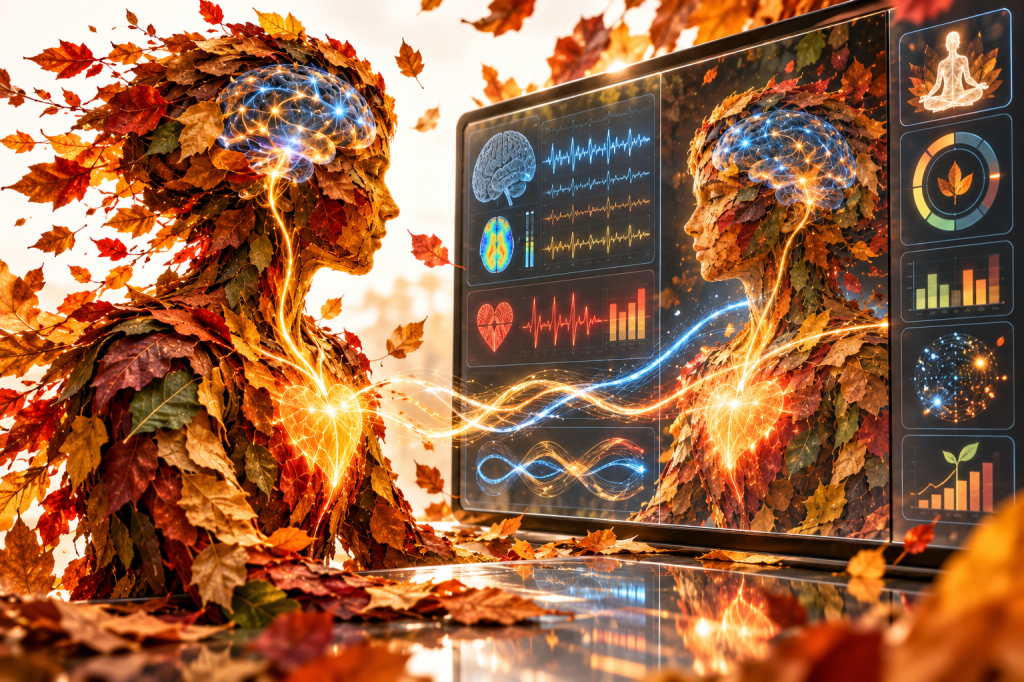
Technology is transforming from an external distraction into a powerful internal lens for self-discovery. By using advanced sensors and interactive software, individuals can now observe real-time data on heart-brain coherence and track the physical rewiring of their neural pathways through neuroplasticity. This convergence of digital feedback and biological awareness allows us to explore the potential of quantum coherence within our cells, helping us master our attention and achieve deeper levels of happiness. Through these tools, the subjective experience of being alive is becoming a measurable and improvable science.
The history of human exploration has mostly been a journey outward. We built telescopes to see distant galaxies and microscopes to see tiny microbes. However, the most complex structure in the known universe remained largely invisible to us. That structure is the human mind and its relationship with consciousness. For a long time, understanding your own thoughts or emotions was a matter of guesswork and quiet contemplation. You could feel your heart race or your mind wander, but you had no way to see the actual mechanics of those experiences.
We are now entering a revolutionary era where technology acts as a bridge to our inner world. It allows us to move beyond simply surviving and into a state of thriving by giving us the data we need to change our own biology. By using these tools, we can finally investigate our attention, perception, and awareness with the same precision we use to study the stars.
Table Of Contents:
- What is the science behind heart-brain coherence?
- How does technology drive neuroplasticity in the modern age?
- Can we observe quantum coherence within our own biological systems?
- Why are interactive sensors the key to mastering our attention?
- How do digital environments create a playground for consciousness?
- The QuantumPub AI Protocol for Inner Mastery.
What is the science behind heart-brain coherence?
Most people think of the brain as the sole commander of the body, but the heart actually sends more signals to the brain than the brain sends to the heart. Heart-brain coherence is a state where the rhythms of these two vital organs fall into a harmonious dance. Imagine a rowing team where everyone is pulling the oars at different times. The boat moves, but it is shaky and slow. When the team syncs up, the boat glides effortlessly. This is what happens when your heart and brain are in coherence.
Technology allows us to see this rhythm through a metric called heart rate variability. Modern sensors can track the tiny millisecond changes between your heartbeats and display them on a screen as a smooth wave or a jagged mess. When you see a jagged line, you know you are stressed or anxious. When you see a smooth, consistent wave, you are in a state of coherence. This feedback loop is essential because it teaches your nervous system what balance feels like. By using these sensors, you are not just relaxing; you are training your heart and brain to communicate more efficiently, which leads to better emotional control and clearer thinking.
How does technology drive neuroplasticity in the modern age?
Neuroplasticity is the amazing ability of the brain to change its shape and function based on experience. In the past, we thought the brain was fixed once we reached adulthood. We now know that the brain is more like a garden that can be redesigned at any age. The challenge is that changing your brain takes incredible focus and repetition. This is where digital tools become vital. Apps and neurofeedback devices provide the constant, immediate feedback required to make these changes stick.
When you use a neurofeedback headset, it monitors your brainwaves while you perform a task. If your focus slips, the app might change the sound of the music you are hearing or make a visual display grow dim. This immediate consequence teaches your brain to recognize the state of focus versus the state of distraction. Over time, this rewires your neural pathways. You are essentially building new roads in your mind. The technology acts as the construction crew, showing you exactly where to lay the pavement so that your thoughts can travel more efficiently.
Can we observe quantum coherence within our own biological systems?
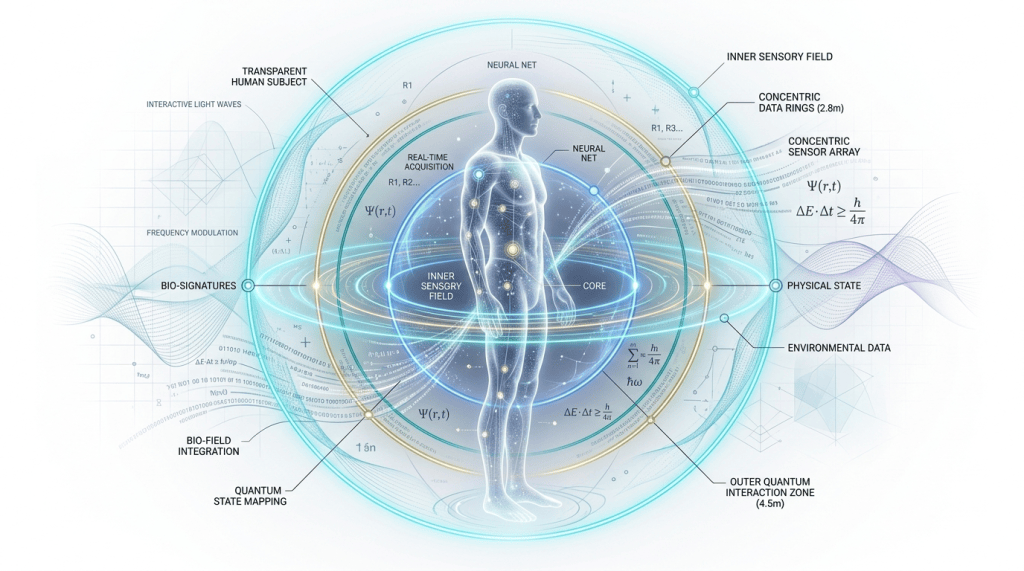
The concept of quantum coherence suggests that subatomic particles can work together in a unified state, allowing for incredibly fast information processing. Some scientists believe that our brains utilize this quantum behavior within tiny structures called microtubules inside our neurons. If this is true, our consciousness is not just a result of chemical reactions but is tied to the very fabric of the universe. This would mean that our thoughts have a much deeper impact on our physical reality than we ever imagined.
Technology is helping us investigate this by measuring how deep states of meditation or focus affect our biological coherence. When a group of people enters a highly coherent state, some sensors have detected changes in the local environment, suggesting a field effect. While we are still in the early stages of this research, interactive systems are allowing us to collect massive amounts of data on how human intention interacts with digital random number generators or sensitive magnetic field detectors. This is the frontier where physics meets the soul, and technology is the only tool sensitive enough to capture it.
Why are interactive sensors the key to mastering our attention?
Attention is the most valuable currency we have. In a world full of notifications and endless scrolling, our attention is constantly being fragmented. Interactive sensors, such as wearable rings or headbands, act as an external alarm system for our focus. Usually, when your mind wanders, you do not notice it until ten or fifteen minutes have passed. By then, you have lost your momentum. Sensors shorten this gap to a fraction of a second.
These devices turn the invisible process of thinking into a visible game. By watching a line on a screen or listening to a specific tone, you receive a gentle nudge the moment your mind starts to drift. This is revolutionary for human potential because it turns a passive activity like sitting still into an active training session. You are no longer just hoping to stay focused; you are using a high-tech coach to ensure you stay on track. This mastery of attention is the foundation of deep happiness because it allows you to be fully present in whatever you choose to do.
How do digital environments create a playground for consciousness?
Virtual reality and immersive digital environments are often seen as ways to escape the real world, but they can actually be used to dive deeper into our own consciousness. By placing a person in a perfectly controlled digital environment, we can remove the chaos of the outside world and focus entirely on internal perception. These systems can create visual representations of our own biological data, such as a forest that grows taller as our heart rate slows down.
This creates a powerful psychological loop. When you see your internal calm reflected as a beautiful digital sunrise, your brain receives a hit of dopamine that encourages you to stay in that state. This is more than just entertainment; it is a laboratory for the self. We can use these environments to face fears in a safe space, practice empathy by seeing the world through someone else’s eyes, or reach states of awe that trigger profound shifts in our perspective. Technology becomes the sandbox where we can test and expand the boundaries of who we are.
The QuantumPub AI Protocol for Inner Mastery
To begin using technology to explore your own consciousness, follow this structured approach to integrate feedback and awareness into your daily routine.
Integrate and expand. Once you can reach a state of coherence using technology, try to recreate that same feeling throughout the day without the device. The goal is to use the technology as training wheels until your brain learns to ride on its own.her in a state of coherence amplifies the effect and strengthens your community bonds.
Establish a baseline. Use a wearable sensor to track your heart rate variability and sleep patterns for one week without changing your behavior. This gives you a clear picture of your starting point.
Implement a daily feedback loop. Dedicate fifteen minutes each morning to using a neurofeedback or biofeedback tool. Focus on shifting your internal state based on the data the device provides.
Practice heart-centered breathing. While watching your coherence levels on a sensor, breathe in for five seconds and out for five seconds. Use the visual feedback to find the exact rhythm that puts your heart and brain in sync.
Engage in conscious digital consumption. Replace twenty minutes of mindless scrolling with an immersive meditation or focus app that requires your active participation and provides data on your performance.
Document the subjective shift. Keep a simple log of how you feel after your tech-assisted sessions. Note any changes in your ability to stay calm during stress or your capacity to concentrate on difficult tasks.


Leave a Reply