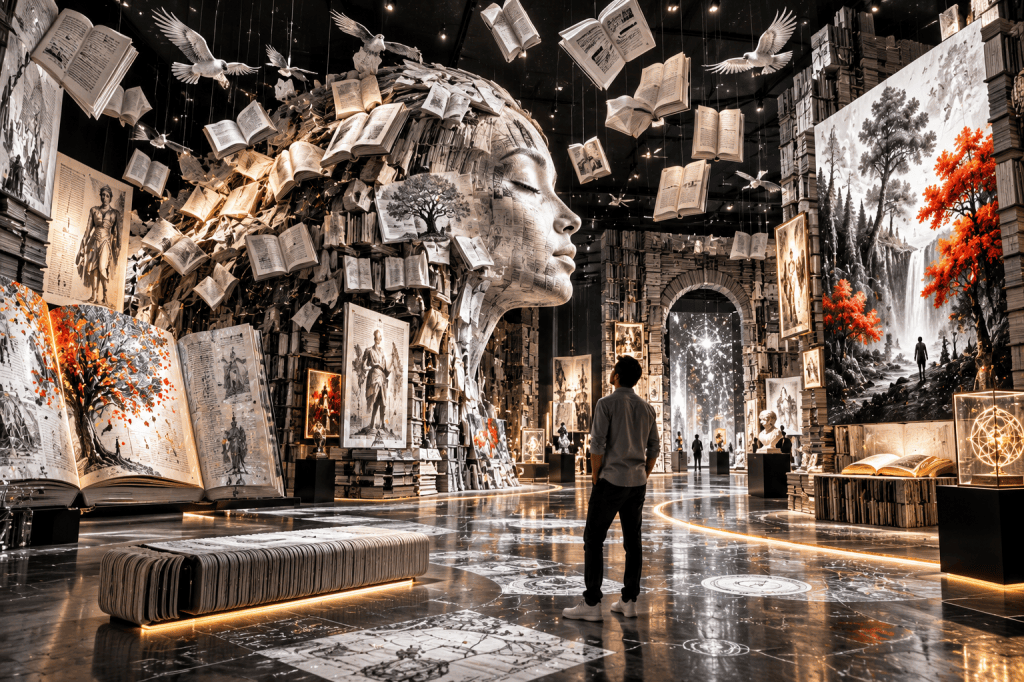
In 2026, merely running a museum, art gallery, or cultural center isn’t enough; the key is to transform it into an immersive art experience. This evolution is driven by sophisticated AI-powered “consciousness and coherence technologies” that elevate passive observation into dynamic, personalized engagement, ensuring cultural institutions remain vibrant and relevant in our digitally-forward world.
The Dawn of Immersive Cultural Engagement: What AI Tech Offers
The cultural sector, once perceived as slow to adopt, is now on the precipice of a revolution fueled by advanced AI and Extended Reality (XR). The “consciousness and coherence technologies” mentioned in the source text, while sounding a bit like something from a sci-fi novel, are very much a reality in 2026. Think of them as the next evolution of AI-driven sensory integration and personalized interaction.
At their core, these technologies leverage high-fidelity spatial computing, advanced haptics, generative AI, and sophisticated bio-feedback systems to create experiences that respond in real-time to an individual’s presence, attention, and even emotional state. It’s about creating a ‘coherent’ experience where every digital and physical element works in harmony, and where the content adapts intelligently to the ‘consciousness’ of the visitor. This isn’t just about putting on a VR headset; it’s about building entire environments that breathe and react with the audience.
Deconstructing “Consciousness and Coherence Technologies” in a 2026 Context:
- Adaptive AI & Emotional Intelligence: Advanced AI models, often running on edge computing infrastructure, can now analyze subtle cues-from gaze direction to physiological responses (via wearable sensors or embedded environmental tech)-to tailor the exhibit in real-time. This could mean adjusting lighting, soundscapes, narrative pathways, or even the generative art itself to match a visitor’s perceived mood or interest.
- High-Fidelity Spatial Computing & XR: Beyond basic VR/AR, 2026 sees spatial computing integrating seamlessly with physical spaces. Mixed reality overlays, haptic feedback suits or surfaces, and scent emitters are becoming more commonplace, blurring the lines between the digital and the physical to an unprecedented degree. This creates a truly “immersive” layer over existing artifacts.
- Generative Content & Dynamic Narratives: AI isn’t just displaying pre-rendered content; it’s creating it on the fly. Imagine an ancient landscape painting that, through AI, becomes a living, breathing diorama, generating new flora, fauna, and weather patterns based on visitor interaction, or even adapting its artistic style. Narratives can branch and evolve based on a visitor’s choices, creating a unique story for every individual.
- Bio-feedback and Neuro-interfaces (Emerging): While still largely experimental in mainstream applications, the integration of non-invasive bio-feedback (e.g., heart rate variability, skin conductance) and early-stage neuro-interfaces is starting to surface in premium immersive experiences. This allows for an even deeper, more subconscious level of interaction, where the environment responds to internal states.
Why Cultural Institutions Need This Transformation
The imperative to embrace these technologies isn’t just about being cutting-edge; it’s about survival and relevance. In a world saturated with digital entertainment, traditional institutions face a significant challenge in capturing and sustaining attention. Immersive experiences offer a potent solution.
- Enhanced Engagement & Deeper Understanding: Visitors no longer passively observe; they actively participate. This engagement leads to a more profound connection with the art, history, or science on display. Learning becomes experiential, making complex subjects accessible and memorable.
- Expanded Audience Reach: Immersive experiences are a magnet for younger demographics and those seeking novel forms of entertainment. They can attract new visitors who might traditionally bypass cultural institutions, transforming them into vibrant social hubs.
- Personalized Journeys: No two visitors have the same experience. AI-driven personalization ensures that content resonates individually, whether it’s adjusting the historical context for a child or offering deep analytical layers for an expert.
- New Revenue Streams: Premium immersive experiences can command higher ticket prices. Digital twins of exhibits can be monetized through online access or NFTs, and institutions can host corporate events within these unique digital frameworks.
- Preservation and Accessibility: Beyond direct engagement, these technologies enable the creation of highly detailed digital archives and digital twins of artifacts, ensuring their preservation and making them accessible to a global audience, regardless of physical location or accessibility needs.
- Competitive Advantage: Cultural institutions that pioneer these experiences will establish themselves as leaders, drawing significant media attention and philanthropic support, distinguishing themselves in an increasingly competitive landscape.
Implementing the Immersive Transformation: Practical Considerations for 2026
From a business structuring perspective, the implementation of such advanced systems requires careful planning and a strategic roadmap. It’s not a flip of a switch; it’s a significant digital transformation project.
- Infrastructure Modernization: High-bandwidth networking, robust edge computing capabilities, and cloud integration are foundational. Streaming high-fidelity XR content and processing real-time AI analytics demand significant computational power and network stability.
- Content Creation & Curation: This is a new frontier for artists, historians, and educators. Institutions will need to invest in teams skilled in 3D modeling, animation, generative AI prompting, interactive narrative design, and data interpretation. Partnerships with specialized tech studios are often key.
- Ethical AI and Data Privacy: As a legal professional, I cannot stress enough the importance of responsible AI development. When collecting bio-feedback or personalizing experiences, robust data privacy protocols (e.g., GDPR 2.0, state-specific regulations that have evolved by 2026) and transparent ethical guidelines for AI use are paramount. This builds trust and mitigates legal risks.
- Staff Training and Development: The operational staff-from curators to front-of-house personnel-will need comprehensive training on the new technologies, troubleshooting, and how to guide visitors through these novel experiences.
- Phased Rollout and Iteration: A “big bang” approach is rarely successful. Start with a pilot exhibit, gather user feedback, iterate rapidly, and then scale. This allows for refinement and optimization based on real-world interaction.
- Funding and Partnerships: Grants, philanthropic donations, corporate sponsorships, and even public-private partnerships will be crucial. The return on investment (ROI) needs to be clearly articulated to secure necessary funding.
The Future is Here: Example Use Cases in 2026
To bring this into sharper focus, let’s consider a few tangible examples of how these consciousness and coherence technologies are being applied:
- The “Living History” Archive: A history museum in 2026 might use generative AI and deepfake technology (ethically applied with informed consent, of course) to create interactive holograms of historical figures. Visitors can converse with an AI-powered Abraham Lincoln or Frida Kahlo, asking questions and receiving responses crafted from vast historical datasets, providing an unparalleled sense of presence and connection.
- Dynamic Art Interpretation: An art gallery could feature a classic painting that, upon a visitor’s prolonged gaze (detected by subtle eye-tracking), subtly shifts its lighting, introduces ambient soundscapes reflective of its historical period, or overlays AI-generated contextual information tailored to the viewer’s apparent interest level.
- Sensory Symphony Exhibits: A science center might offer an exhibit on marine life where visitors wear haptic vests and stand on pressure-sensitive floors. As a digital whale swims past, they feel its immense presence through vibrations and hear its calls through spatial audio, with the entire experience adapting its intensity based on their bio-feedback.
- Collaborative Creative Spaces: Beyond consumption, some institutions are becoming creative hubs. Imagine a digital art studio where visitors use gesture controls and voice commands to co-create AI-generated artworks, which are then projected onto gallery walls or minted as unique digital assets.
The transition from simply “running a center” to “transforming it into an immersive art experience” is more than a technological upgrade; it’s a paradigm shift in how we conceive of cultural engagement. By embracing these sophisticated AI-driven coherence and consciousness technologies, institutions are not just keeping pace with 2026; they are defining the future of human-centered cultural exploration. As an expert in navigating the complexities of emerging tech, I see boundless potential for growth and profound impact on our society’s collective knowledge and artistic appreciation.


Leave a Reply